
Pimsleur | Language Learning
Simon & SchusterEducation
4.14.08K Reviews
- Version
- 7.9
- Installs
- 1.00M
- Age Rating
- Everyone
Screenshots

Our Review of Pimsleur | Language Learning
 Analysis by Appyee
I’d choose Pimsleur if my main goal were to get comfortable understanding and saying useful phrases aloud, rather than spending every study session looking at a screen. The app is built around spoken practice, so it suits people who can give a lesson their attention while walking, doing chores, or travelling. It is less compelling if I want a course centred on grammar explanations, long reading passages, or free-form conversation from the outset.
That distinction matters when choosing a language-learning tool. Many apps in this category lean heavily on visual drills, vocabulary games, or written exercises; Pimsleur puts listening and speaking closer to the centre. I would treat it as a way to build a regular practice habit and a first layer of conversational confidence, not as a guarantee of fluency on its own. Pairing it with real conversations or reading is likely to be more useful than expecting one app to cover every part of learning.
What to decide before starting
Before I begin, I’d ask myself when I can realistically study and what “progress” means to me. If I have a predictable stretch of time when I can listen and respond aloud, the audio-first approach has a natural place in my day. If I mostly study in a quiet office, on public transport where speaking feels awkward, or in short moments when I can only glance at a screen, I may use the course less consistently.
I’d also be honest about my priority. Someone preparing to order food, greet people, or handle simple exchanges on a trip may value hearing phrases and practising a response. Someone preparing for a written exam may need more explicit attention to spelling, grammar, and reading than this style of learning offers by itself. The right choice depends less on whether the app is good in general and more on whether its main practice mode matches the skill I need.
The app is free to install, and its age rating is Everyone. Its in-app purchases range from $0.49 to $479.99 per item, so I would check the purchase details for the language and learning option I’m considering before committing. That broad range makes it especially sensible to confirm what a particular purchase includes rather than assuming every course or access arrangement costs the same.
First Impressions and Getting Started
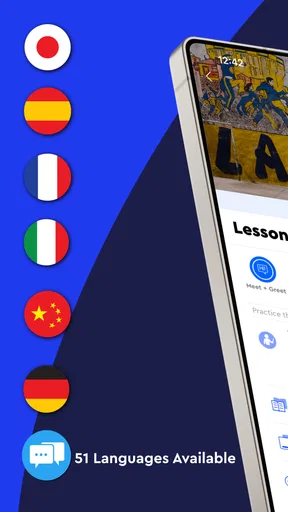
Downloading Pimsleur was a breeze, and I was up and running in no time. Right off the bat, the app greeted me with an intuitive interface. Everything is neatly organized, making it easy to navigate. You start by selecting the language you wish to learn. With over 50 languages available, the choices are plenty, from French and Spanish to less common ones like Swahili or Thai.
Once I picked my language, the app offered a quick placement test. This helps tailor the lessons to your current level, which is a neat little feature. If you’re a complete beginner like I was with Japanese, you can skip the test and start from scratch.
Learning on the Go
One of the standout features of Pimsleur is its audio lessons. These are perfect for those busy bees who love multitasking. I found myself diving into lessons while driving, cooking, or even during my morning jogs. The audio quality is top-notch, and the lessons are structured in a way that keeps you engaged. The method focuses on listening and speaking, which is fantastic for developing conversational skills early on.
What I loved about the audio lessons is their emphasis on pronunciation. The speakers have clear, authentic accents, and the app gives you plenty of opportunities to mimic and practice. It's almost like having a mini-immersion experience, right from your phone.
Interactive Learning
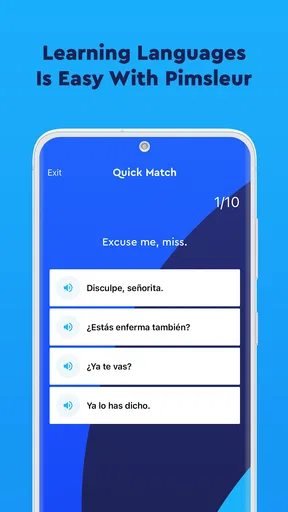
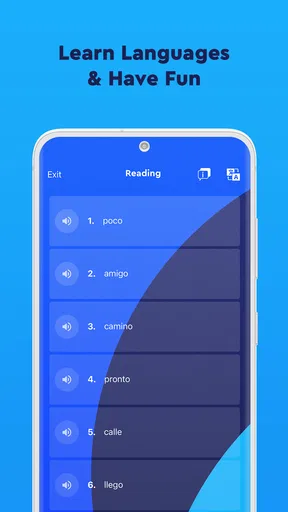
While audio lessons are the core, Pimsleur doesn’t stop there. The app also includes a range of interactive exercises. These are great for reinforcing what you’ve learned and keeping things fresh. I particularly enjoyed the flashcards and quizzes that pop up now and then. They’re quick, effective, and add a nice variety to the learning process.
The app also tracks your progress, which is super motivating. Seeing your streak and advancement in real-time gives you a sense of achievement and pushes you to keep going. Trust me, it’s a small thing, but it makes a big difference!
Turning practice into a routine
The best way I’d use an audio course is to give it one reliable slot instead of treating it as background noise all day. For example, I might listen during a walk, pause when a prompt asks me to answer, and say the response clearly before the lesson continues. That small effort changes the session from passive listening into retrieval practice: I have to recall the phrase, not merely recognize it when I hear it.
A useful everyday scenario is a commute followed by a quick review at home. I could listen to a lesson while walking to the bus, then revisit a few flashcards later when I have a quiet moment. The audio builds familiarity with the sound and timing of a phrase; the visual check helps me notice whether I can connect that sound to its meaning. I would avoid doing the speaking portion while driving, though. If a lesson needs my attention or a spoken answer, safety comes first and the session can wait until I’m parked or travelling as a passenger.
There is also a practical trade-off in repeating out loud. Speaking helps me notice sounds I might otherwise blur together, but it can feel self-conscious in a shared space. I’d choose a setting where I can answer freely, or use the lesson silently only when the app’s format allows that without losing the point of the exercise. A short, attentive session is more valuable than playing audio through a noisy environment and hoping it sinks in.
Where the supporting exercises help
The non-audio activities make most sense to me as a check on recall, not as a replacement for the spoken lesson. If a phrase feels familiar in the audio but I cannot identify it when it appears in a flashcard or quiz, that is a sign I have recognized the sound without learning it securely. I’d use those moments to revisit the phrase and then listen for it again, rather than racing through exercises just to keep a streak intact.
Progress tracking can encourage consistency, but a streak is only a record of showing up; it does not prove that I can understand a new speaker or form a sentence without a prompt. I’d judge progress by practical tests: can I retrieve a useful expression after a gap, understand it at normal conversational speed, and adapt it when the situation changes? That more demanding measure keeps the app’s encouraging feedback in perspective.
For a learner who likes visible structure, the combination of a guided lesson and brief practice activities can make it easier to return after a missed day. Still, I would not let a quiz score decide whether I’m ready to move on. If the same phrase remains hard to recall aloud, repeating or reviewing it is a better choice than advancing simply because the interface says I have completed a session.
When another learning style may suit you better
If I were mainly trying to read a novel, write accurately, or prepare for a classroom test, I would want a resource with more sustained work on text and grammar alongside this app. Likewise, learners who need immediate back-and-forth with a person may get more value from a tutor, a language exchange, or a conversation group. Those options bring their own demands, such as scheduling and the need to speak with another person, but they provide interaction that a prepared lesson cannot fully reproduce.
For someone who thrives on visual puzzles and quick taps, a game-like vocabulary app may feel easier to pick up in spare seconds. The trade-off is that recognizing a displayed answer is not the same as producing it aloud. I’d consider using that kind of tool for spelling or vocabulary maintenance while keeping Pimsleur for listening and speaking, rather than expecting either style to do every job.
Beginners who are nervous about talking can benefit from practising privately before trying a conversation. But a learner who dislikes repeating phrases, cannot spare focused listening time, or wants detailed explanations of sentence structure may find the audio-led rhythm frustrating. I would not recommend choosing it just because learning by listening sounds convenient; it works best when the learner is willing to answer prompts and revisit expressions that do not stick.
Moving between devices, habits, and costs
Changing learning methods has a real cost even when no money is involved: I may have to rebuild a routine and encounter familiar material in a different order. Before switching away from an audio course, I’d write down which situations I can already handle and which phrases still fail under pressure. That gives a new resource a clear starting point and stops me from confusing a fresh interface with actual progress.
If I decide to add a different tool, I’d give each one a distinct job. Pimsleur can be the scheduled listening-and-speaking practice; a book or grammar resource can answer questions about how a sentence is formed; a real conversation can reveal where I freeze. Keeping a small list of phrases I hesitate over makes those resources complement one another instead of making me repeat the same beginner material without a plan.
Simon & Schuster develops the app, and it has an average rating of 4.2 from around 15,000 ratings, alongside roughly 3,800 written reviews. More than a million installs suggest that it has reached a broad audience, but popularity cannot tell me whether its spoken format matches my own habits. The current version is 7.3, and the minimum operating-system requirement is 7.0. I’d check that my device meets the requirement before installing, then review the in-app purchase options carefully so I know what I’m choosing.
Immersive Experience
Another cool feature is the app’s ability to integrate cultural notes. Learning a language is not just about words and grammar; it’s about understanding the culture behind them. Pimsleur provides insightful tidbits about the culture, traditions, and etiquette of the country whose language you’re learning. It’s these little nuggets of information that make the learning process more holistic and enjoyable.
Additionally, the mobile-friendly design means you can learn wherever and whenever you want. Whether you’re waiting in line at the grocery store or lounging in your backyard, Pimsleur is your trusty companion.
Who I’d recommend it to
I’d recommend this app to a learner who wants to start speaking sooner, enjoys learning by hearing and repeating, and can protect a little time for focused practice. It can also suit someone who has studied a language before but wants to make familiar expressions easier to retrieve aloud. The placement option may help such learners orient themselves, while starting from the beginning remains a sensible route for anyone who would rather build confidence from the ground up.
I’d be more cautious for a person whose main goal is reading, formal writing, or detailed grammar study, or for someone who wants an app to provide spontaneous human conversation. In those cases, I’d choose a text-focused course, a structured grammar resource, or a tutor as the primary tool, and use audio practice only if listening and pronunciation are also priorities. That is not a knock on Pimsleur; it is simply a matter of matching the method to the task.
The release date was July 13, 2018, and the app remains a practical option for learners who value spoken practice. I would still judge it by the quality of my own routine: after a few sessions, am I listening closely, answering aloud, and recalling phrases later? If not, I’d adjust the time or setting before deciding that the whole approach is wrong for me.
Final Thoughts
So, is Pimsleur worth it? Absolutely! It’s a well-crafted app that’s perfect for anyone looking to learn a new language in a practical, enjoyable way. The focus on audio-based learning is its greatest strength, especially for those who want to develop strong speaking skills. Plus, the added interactive features and cultural insights make it more than just a language app; it’s a gateway to a new world.
Whether you’re a complete beginner or someone brushing up on a second language, Pimsleur offers a comprehensive learning experience that fits into your life seamlessly. So, why not give it a shot? You might just find yourself speaking a new language sooner than you think!
Verdict
Strengths of Pimsleur | Language Learning
- Effective audio-based learning.
- Wide range of languages available.
- Flexible lesson length.
- Offline access for convenience.
- Focus on conversational skills.
Limitations of Pimsleur | Language Learning
- Limited visual learning aids.
- Subscription can be costly.
- No free trial available.
- Lacks advanced language content.
- Requires consistent practice time.
Similar Picks in This Category
View All
Duolingo: Language Lessons
Duolingo4.7

Google Classroom
Google LLC2.8

Unacademy: Learn & Crack Exams
Unacademy3.2

Bible App for Kids
Life.Church4.4

Cake - Learn English & Korean
Cake Corp.4.7

Brainly: AI Homework Helper
Brainly4.5
Frequently Asked Questions
What is the Pimsleur Language Learning app?
The Pimsleur Language Learning app is a mobile application designed to help users learn a new language through audio-based lessons. It uses the Pimsleur Method, which emphasizes listening and speaking skills. The app offers courses in over 50 languages, allowing users to learn at their own pace with convenient, hands-free learning.
How does the Pimsleur Method work?
The Pimsleur Method focuses on auditory learning and emphasizes language patterns and repetition. Lessons are designed to teach vocabulary and grammar naturally, without rote memorization. Each session is structured to enable users to internalize the language by practicing pronunciation and listening comprehension, gradually building conversational skills.
Is Pimsleur suitable for beginners?
Yes, Pimsleur is well-suited for beginners. The app starts with basic phrases and vocabulary, gradually increasing in complexity as learners progress. Its intuitive design allows users with no prior knowledge of a language to start learning effectively. However, it is also useful for intermediate learners seeking to improve their skills.
Can I learn multiple languages at the same time with Pimsleur?
Yes, users can learn multiple languages simultaneously with Pimsleur. The app allows you to purchase and access courses for different languages under one account. However, it is recommended to focus on one language at a time to maximize retention and effectiveness, especially for beginners.
Does Pimsleur offer offline access to lessons?
Yes, Pimsleur allows users to download lessons for offline use, making it convenient for learning without internet connectivity. This feature is beneficial for users who want to practice during commutes or in areas with limited internet access, ensuring that learning can continue seamlessly.
